
Dashboard › Channels › Ask & Share › Dog is thinking to leave training treats until released and not learning “down”.
Tagged: down, DPH, Lure, teaching opposites
-
Dog is thinking to leave training treats until released and not learning “down”.
Posted by Anonymous Member on March 1, 2024 at 12:29 amHi All,
I have a friend that is currently fostering a shelter dog and she taught her “leave it”. Now the dog is thinking to leave the treat when trying to teach “down”. It’s a super smart 1 year old Whippet-Pit mix. Her name is Bubbles and she sits every time on cue. However, when moving a treat down from her nose to the ground, she doesn’t respond or even look at the treat until my friend says “ok”. She uses all sorts of high value treats such as hotdogs, cheese, even some tiny stinky fish. Has anyone some tips to help teach down to Bubbles? Maybe rewarding her when she lays down naturally and then introduce the “down” cue? Thanks ????
Catherine Comden replied 2 years, 5 months ago 6 Members · 13 Replies -
13 Replies
-
Yes, @Tess , your friend could certainly capture natural occurrences of the DOWN, mark and reward when they happen, and add the cue when the dog is offering the behavior reliably and with ease.
However, a willingness to follow a food lure can sure be helpful, so I’d also want to help a dog learn to understand the difference between LEAVE IT and TAKE IT. Perhaps start with hand-feeding little bits of food in any position, saying TAKE IT just as each piece is offered. Then have dog move a bit to access the food to TAKE IT — walking forward, turning head to left or right, then dropping head downward.
I recently posted about teaching opposites (off/take it) which you can see ➡ here.
Another option: teach hand targeting and then use the hand as the ‘lure’ instead of food.
Change Thumbnail -
Generating thumbnail…
-
Generating thumbnail…
-
-

Aw, Good Girl Bubbles! She’s trying so hard! I’ve seen where similar things have happened – what they learn first, they learn best and can get “sticky” about abandoning that strategy for something else.
I agree with Virginia that food luring is a good skill to have… try starting with simple “follow this” with Bubbles standing or even when she’s already in motion. MICRO-STEPS – even just a head turn, mark & reward! Then extend the time/distance she follows the lure.
You can lure a dog to DOWN without a SIT as well. It’s essentially a BOW first, then just wait til they drop their haunches. I actually prefer this as I like to teach a running DOWN.
We’d love to see a photo of Bubbles if you have one! Let us know how this goes!
-

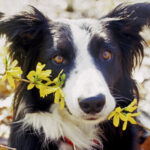
Hi all, thanks for the tips. I’ll for sure pass them on. I also attached some pictures of Bubbles and am glad she went to a foster home. She developed “Happy Tail” inside the kennel.
-

I agree with everyones advice here. Adding a “take it” cue will be valuable- I do admire how he is so good at a leave it.Such a good and beautiful girl! I was also thinking when luring maybe do with some sticky peanut butter on the hand, maybe it wont resemble a hard treat and he can follow the hand signal. So basically its smeared on the hand. Another good tip id make sure its on a comfy surface when learning down – if needed I had to teach some of my dogs on a elevated bed or higher surface , so naturally as I lure the treat down the body falls..so my hand is in a lower position then the surface. They are kind of looking down and start to fall into position. If the food doesn’t work ( because of leave it ) try a favorite toy with the elevated surface because like I said they are naturally looking down. Let us know how everything goes!!!
-
Dogs can learn the difference between a lure (I put treat right to their nose and don’t mind if they lick it while I lure them to move for a new behavior), “Zen” treat which I hold silently and still in an open hand, or dish (don’t take this treat until I mark a behavior, and say ok) and a leave it (you’ll never get the treat because I said “leave it”).
-

I apologize if someone mentioned this already but one thing that helps is don’t train leave it and then expect the dog to follow a treat for luring. Train on separate days. This holds true for many other behaviors. You wouldn’t want to teach hand targeting or leave it in the same session. It’s very confusing for a dog to train two behaviors in the same session when they contradict each other
-
@bmacwatt , I appreciate your reply, and I, too, would prefer to teach skills like ‘leave it’ and ‘hand targeting’ in separate sessions. It’s also very helpful if the person working with the dog is very precise (at least at first) about how they present their hand for a nose target, so it looks considerably different than another hand presentation, say like when a person is asking their dog to give a paw, or even the way they present a treat held in their hand.
I think we sometimes don’t spend enough time teaching our clients about when to add verbal cues and how to teach the dog to really concentrate on our signals’ meanings.
I personally find it really helpful to teach certain opposites together in the very same session. Done clearly, I think we can very swiftly teach opposites like leave it/take it and stay/release in the very same sessions. I’m guessing you may do that, too, with these skills…?
Below is a video of one of my dogs learning to discern between ‘touch’ and ‘paw’ — he was initially confused about which behavior to offer when seeing the hand signals, so I made sure he learned to wait for a verbal cue before responding, even presenting the hand without a cue sometimes so he learned to wait beyond that for the verbal cue.
Change Thumbnail -
Generating thumbnail…
-
Generating thumbnail…
-
This is such a fabulous topic and video, @virginiad Thanks for sharing Tavish – what a sweetie.
I’m super curious about the time you mark verbally “good” and don’t feed … Can you explain why?
@bmacwatt – I think we’re all on the same page. You and Virginia are both bringing up great points. I like to think of behaviors in pairs to help me keep my dog from becoming frenetic and offering all the behaviors all the time (stimulus control). I also agree that training behaviors that are too similar too close together can be really confusing for a dog… like the time I was trying to capture sneezing and ended up with a really strong superstitious barking behavior…. I was sloppy!
I’m taking Magic to a puppy class and the instructors spent 15 minutes with us working on stay on a mat in a down, then wanted the pups to do a sit/stay – of COURSE they were all dropping to a DOWN! Poor confused pups. That could have been set up so much more clearly.
Love these discussions; there are so many nuances to the science and art of training dogs.
-
Yes, I should’ve rewarded that with a treat just then. That would be my norm, so it was just an oversight in that moment.
OTOH, there is a reinforcing element to giving the following cue, so all was not lost. ????
-
Right – I thought it was intentional because it sure seems smart! lol – permission to be human and also… getting to do the easier/more fun behavior is also motivating. There are layers.
-
-
-
-
-
Virginia. I agree with you I probably didn’t express myself clearly in that yes you can train two behaviors that seem to be the opposite I only mentioned it as maybe the dog was getting confused doing it in same session as a possible reason. As we know every dog is different. I didn’t mean that you should never train the two behaviors together. Thanks for keeping me on my toes.

Log in to reply.